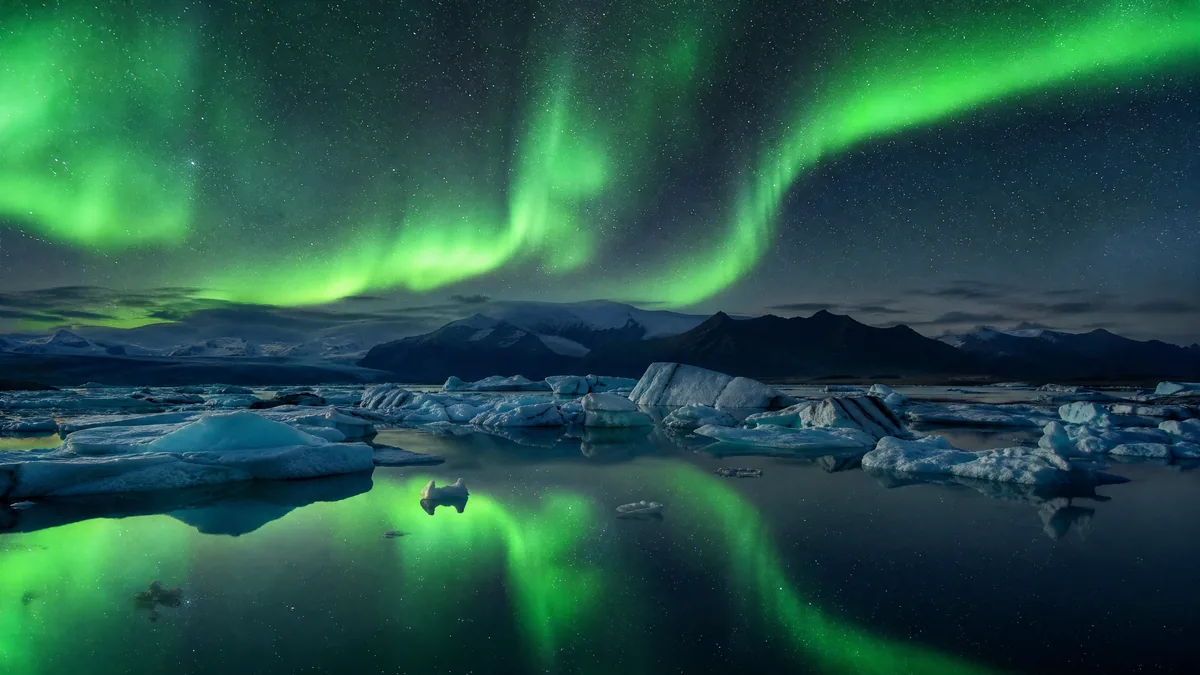
Booking choice: The small-group lagoon tour, from $242 per person. Check dates Tour details
Jökulsárlón sits at about 64 degrees north, under the band where the aurora is most often overhead. On a clear winter night the lights can show over the icebergs and reflect in the water. Getting that photo takes a dark sky, a clear sky and some luck, in that order.
Here is what the space weather agencies say about winter 2026-27, the dark hours at the lagoon month by month, the moon dates to plan around, and which tours put you outside after dark.
The quick answer
Solar cycle 25 is in its declining phase, and NOAA and NASA note that strong storms still happen in this phase. At Jökulsárlón the aurora season runs from about September to early April; December and January have the most dark hours. Cloud is the real limit, so check the Icelandic Met Office forecast. Of the day trips on this site, Gateway to Iceland's small-group tour adds a northern lights stop from 1 September to 1 April. No tour can promise a sighting.
Is 2026-27 a good winter for the northern lights at Jökulsárlón?
Yes. The Sun has passed the peak of solar cycle 25, but the declining phase still brings strong geomagnetic storms, and south-east Iceland sees aurora on quieter nights too.
On 15 October 2024 NASA and NOAA announced that the Sun had reached its solar maximum period, and added that "though less frequent, scientists often see fairly significant storms during the declining phase of the solar cycle."
NOAA's Space Weather Prediction Center keeps the numbers on its solar cycle progression page. Its panel predicted a peak between November 2024 and March 2026, and it expects cycle 26 to begin between January 2029 and December 2032. Winter 2026-27 is therefore on the way down: fewer headline storms than in 2024, and plenty of activity for a place this far north.
When is the aurora season at Jökulsárlón, and how many dark hours do you get?
From about September to early April, whenever the sky is dark and clear. December and January give the longest nights.
The aurora needs darkness, and in summer Iceland has none. The times below are calculated for the lagoon in Icelandic time (UTC all year). "Fully dark" is the end of astronomical twilight; strong aurora shows earlier, in the deep blue after sunset.
Note the odd pattern: in mid-November the sky is fully dark later than in December, because twilight lasts longer at the solstice. The darkest hours are always around 01:00, not midnight, since the lagoon sits far west of its time zone's meridian.
| Date | Sunset | Fully dark (approx.) | Our take |
|---|---|---|---|
| 15 Sept 2026 | 19:30 | 22:30 to 03:25 | First dark nights |
| 15 Oct 2026 | 17:45 | 20:25 to 05:15 | Last boats, long nights |
| 15 Nov 2026 | 16:05 | 19:00 to 06:40 | Ice caves open, dark early |
| 21 Dec 2026 | 15:05 | 18:35 to 07:30 | Longest night |
| 15 Jan 2027 | 15:55 | 19:05 to 07:20 | Cold, clearer spells |
| 15 Feb 2027 | 17:35 | 20:20 to 06:15 | Our pick: caves, light and dark |
| 15 Mar 2027 | 19:05 | 21:50 to 04:35 | Equinox storms |
| 10 Apr 2027 | 20:20 | No full darkness | Season winding down |
Why does the weather matter more than the solar cycle?
Because the aurora happens far above the clouds. The south-east coast catches a lot of Atlantic weather, and one cloud deck hides everything.
A moderate aurora under a clear sky beats a big storm behind cloud every time. The Icelandic Met Office aurora forecast shows both on one page: activity on a scale of 0 to 9 and a cloud cover map of Iceland. Green on that map is cloud, white is clear. NOAA's 30-minute aurora forecast is the short-range check.
At this latitude you do not need a strong storm. A modest reading of 2 or 3 can put green arcs overhead if the sky is open. Plan several nights in the south if you can, and watch the cloud map more than the storm news.
When are the darkest nights of winter 2026-27?
Around the new moons: about 9 November, 9 December, 8 January, 7 February and 8 March. Full moon nights wash out faint aurora.
A full moon over snow and ice lights the whole lagoon. That is lovely for photos of the icebergs and bad for a faint display. For the best odds, aim for the week either side of a new moon. Strong aurora still shows under a full moon, so do not cancel a trip over it.
The dates below are calculated and can be a day off depending on the time zone you check.
| Month | New moon (darkest) | Full moon (brightest) |
|---|---|---|
| November 2026 | About 9 Nov | About 24 Nov |
| December 2026 | About 9 Dec | About 24 Dec |
| January 2027 | About 8 Jan | About 22 Jan |
| February 2027 | About 7 Feb | About 20 Feb |
| March 2027 | About 8 Mar | About 22 Mar |
Which Jökulsárlón tours stop for the northern lights?
Gateway to Iceland's small-group day trip has a northern lights stop from 1 September to 1 April. The multi-day tours put you in the south after dark, without a guided hunt.
Gateway to Iceland's small-group tour lists a "Northern Lights hunt" of 30 minutes on the way back to Reykjavík, "available between 1st September and 1st April, dependent on the sky conditions and aurora activity". It is a 16-hour day for $242, with a maximum of 17 on the minibus. Guests report it working: one wrote that the guide "pulled over to let us see the northern lights", and another "was hoping for northern lights but weather did not permit".
The big-coach day trips get back to Reykjavík late at night and drive the second half in the dark, so a sighting through the window is possible, never scheduled. The 3-day Arctic Adventures tour stays two nights near Kirkjubæjarklaustur and says you may spot the lights from August to May, but a guided hunt is not part of it. The 2-day small-group tour spends its night on the South Coast. For the lagoon itself after dark, you need your own car and a bed nearby.
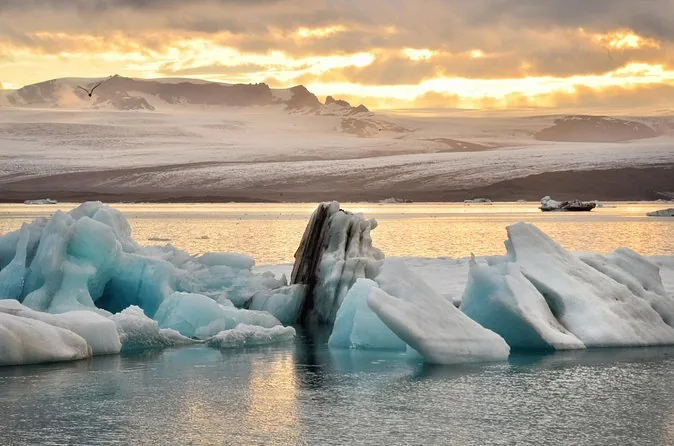
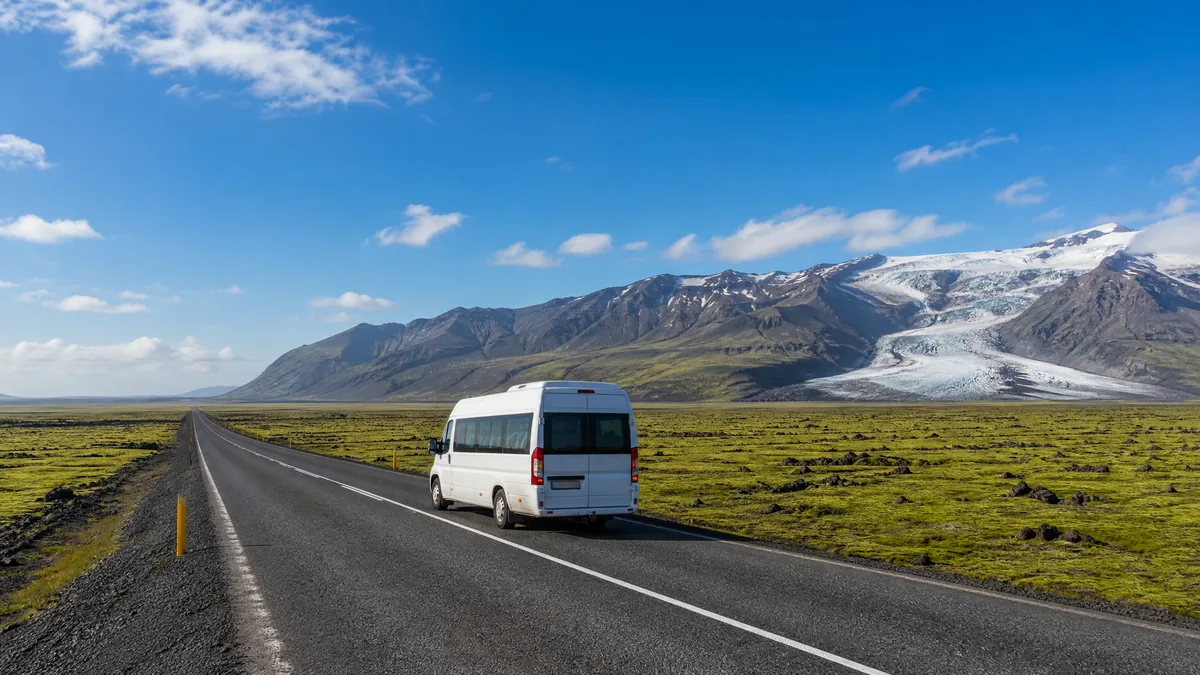
Small minibus, Fjaðrárgjúfur canyon, one hour at the lagoon and a northern lights stop on the way home from September to April.
Explore the small-group lagoon tour Tour detailsCan you photograph the northern lights over the icebergs?
Yes, if you stay nearby and drive back after dark. The lagoon is open all night, and the car park is right on the shore.
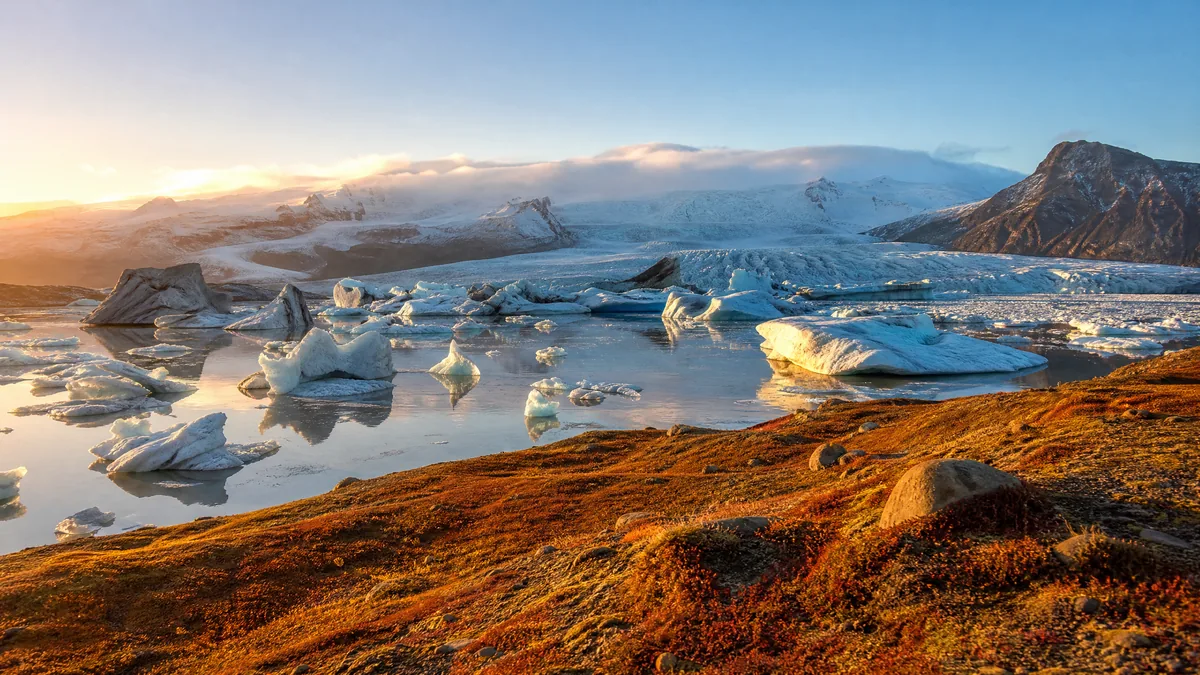
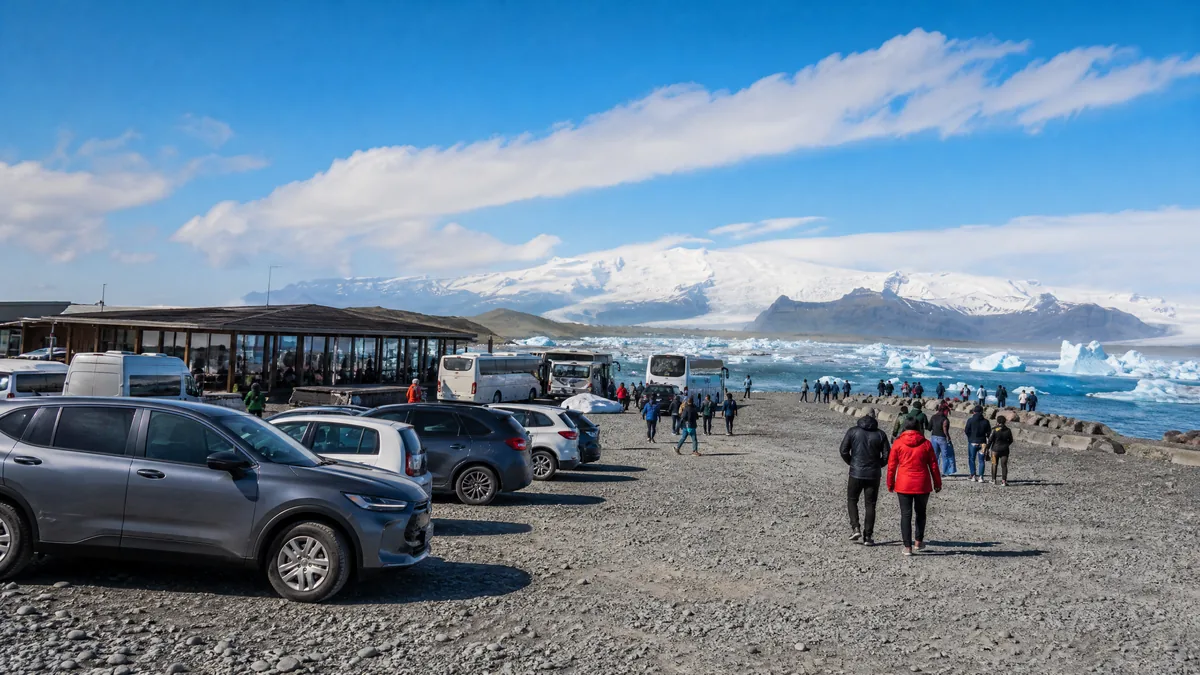
The classic shot is the one in our hero image: green arcs over the icebergs, doubled in still water. It needs a calm night, which is rarer than a clear one. Diamond Beach, across the road, puts glowing ice in the foreground instead. Bring a tripod, set a wide lens to a few seconds at a high ISO, and keep a headlamp on red.
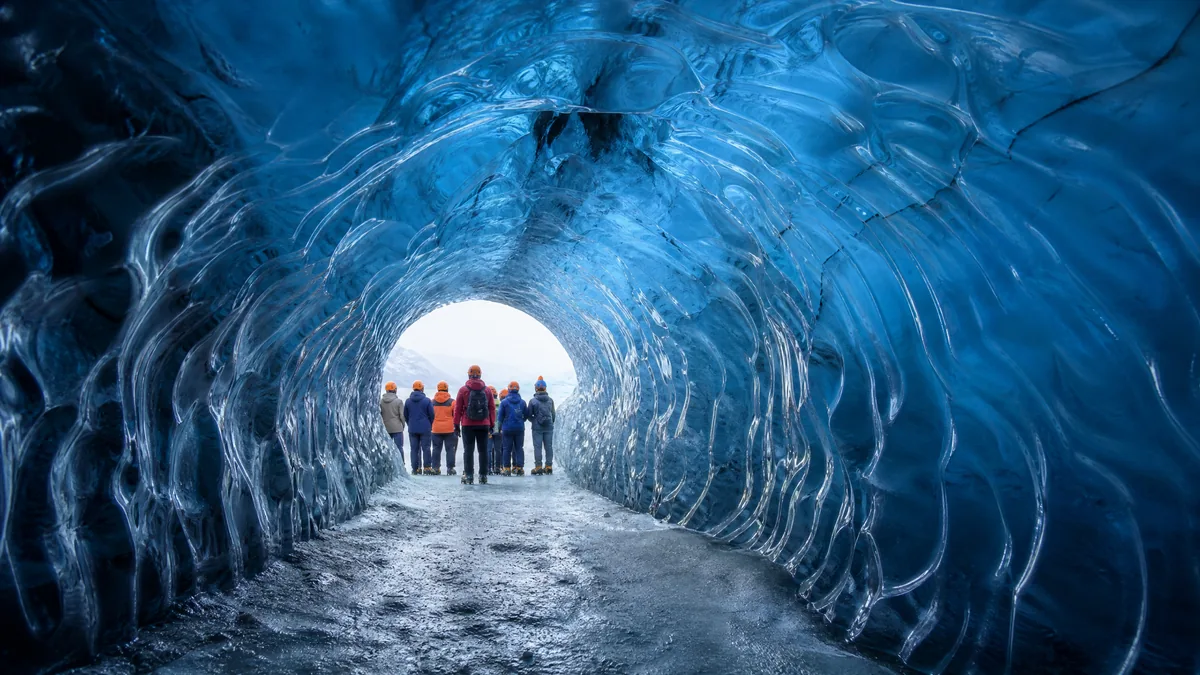
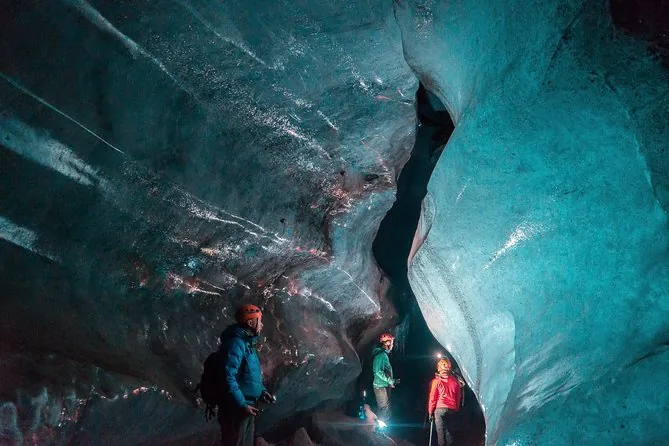
Winter driving is the catch. Route 1 has no street lights here, ice is common, and storms close the road. Check umferdin.is and SafeTravel before you go out, and never stop on the road itself to look up. Our winter guide has the rest, and the ice cave post covers the daytime half of a winter trip.
Frequently asked questions
Can you see the northern lights at Jökulsárlón?
Yes, on clear, dark nights from about September to early April. The lagoon has no light pollution. Sightings are never guaranteed and depend mostly on cloud cover.
Will the northern lights be weaker in 2026-27?
Big storms are less frequent after the solar maximum, but NASA and NOAA note that significant storms often happen in the declining phase. Iceland's latitude matters more than the cycle.
Do Jökulsárlón day trips stop for the northern lights?
Gateway to Iceland's small-group tour includes a 30-minute northern lights stop from 1 September to 1 April, weather permitting. Other day trips do not schedule one.
What is the best month to see the aurora over the lagoon?
February: long nights, more stable weather than early winter, and enough daylight for an ice cave tour. December and January have the most dark hours.
Ready to book
Choose your tour
Free cancellation up to 24 hours before on every option. Prices are from-prices in USD and move with the season.
Small-Group Glacier Lagoon & Fjaðrárgjúfur
- Driver-guide in a minibus of up to 17
- Pickup at central hotels or nearby bus stops, 7:30 am
- 1 hour at Jökulsárlón, 20 min at Diamond Beach
3-Day Golden Circle, Ice Cave & Glacier Lagoon
The Golden Circle, the lagoon and a guided ice cave, two nights included
2-Day South Coast, Glacier Hike & Jökulsárlón
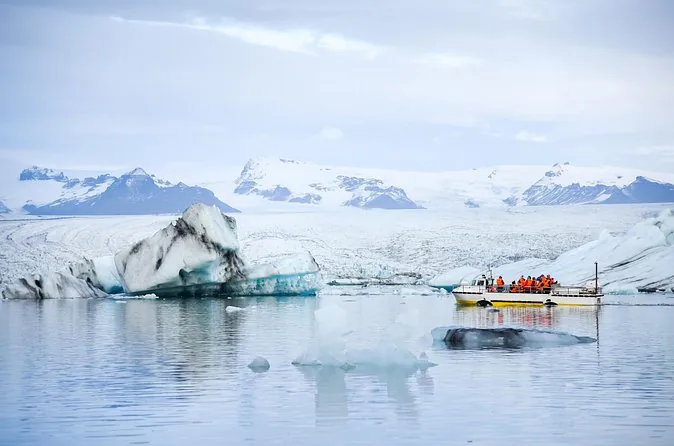
90 minutes at the lagoon, a glacier hike and a night on the coast